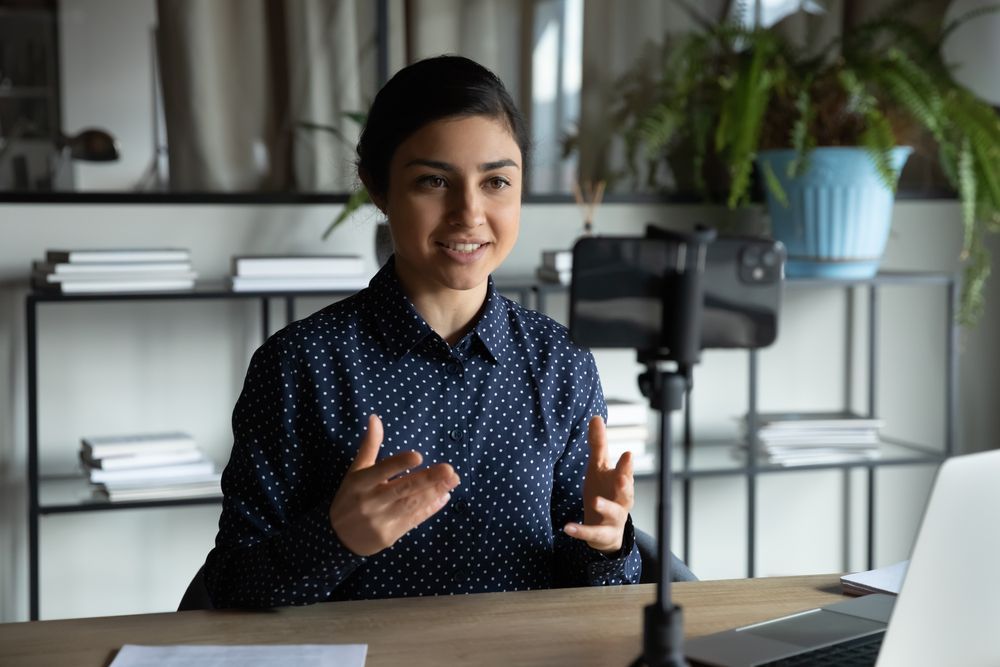
Everything your need to be aware of about recording video for online course
You have an idea of your own online course you made a lesson plan and now you are eager to begin working on your content.
It's normal to put the emphasis on the quality of content first. Then you'll think about topics, formats for videos, publishing frequency, and you may even experiment with the various platforms for sharing videos.
E-learning platforms allow you to share and earn money for the sharing of video content online. Some of them require using apps from third parties, while others include that option in their plans..
However, first you must have quality material. For creating an online course you need to make some videos. Like plain text, video can be made in various formats including screenrecordings, videos, audio, graphics and other.
Once you spend some time recording actual videos You'll discover that there's a technical side of video which is equally important to take into consideration.
Essential video equipment
Course creators are often lost in the selecting the equipment to use, choosing a locations for recording or selecting editor software for video. In fact, videos require not any special hardware or any special software for creating and edit. The video can be made within a matter of minutes at your workstation in your own home.
Below is a checklist of the basic equipment for video production you'll need when you start your online course.
Camera
Obviously the most important element of equipment for video is cameras. Before you head to a store to buy the latest camera, it is important to know that you can utilize any device capable of recording high-quality (at minimum 1080p) video. It is possible to record the video using such devices as your phone or laptop.
Five Best cameras for 1080p video: (2022 Guide & Reviews) Bestoflens With the intention to take the revolutionary leap in video making I've used several of the top camera for 1080p video. Bestoflens Sharon Advik
Microphone
High-quality audio must be included in your video. There's nothing worse than working for hours on a project only to find that your audio is dipping between the two.
The sound could be recorded along with the visual portion of the video, or later on, what is commonly referred to as the voiceover. In either case, we suggest using an external microphone.
Why?
Built-in laptop,smartphone or even camera microphones usually have bad quality audio because they're incapable of recording or block out annoying noises efficiently, which is why the second essential tool to create online video courses is a quality microphone. A quality microphone doesn't pick up any sound in the surrounding area (at least if that's what you want).
You can go for a tiny, clip-on mic, and often they are wireless which allows you to easily move about while recording.
Lighting
Lighting is necessary if you are recording indoors.
If you're recording indoors with no windows, even when it's a clear and sunny day--is not sufficient to produce the finest quality images your camera is capable of.
This is why, as it is possible for you to increase the amount of light sources using spaces with lots of windows. Or, you can opt for the less complicated and safe alternative of an lighting kit.

Natural light
Natural light is a time saver when setting up the lights but it is important to keep track of the daylight hours.
The trick is to get lucky to have weather that is bright, not rainy day. Then, you can set up your recording space close to a window (or more importantly, several windows) and await a ideal time to record; when it's not too dark or too hot in case you have unwanted reflections or the video may be too bright.
If you take a footage over a period of time, you will have slight variations in lighting each time this could be an effect you want.
But recording a video is already a laborious task and should you find it too difficult to worry about then you could try to imitate natural lighting using artificial methods.
Lighting effects
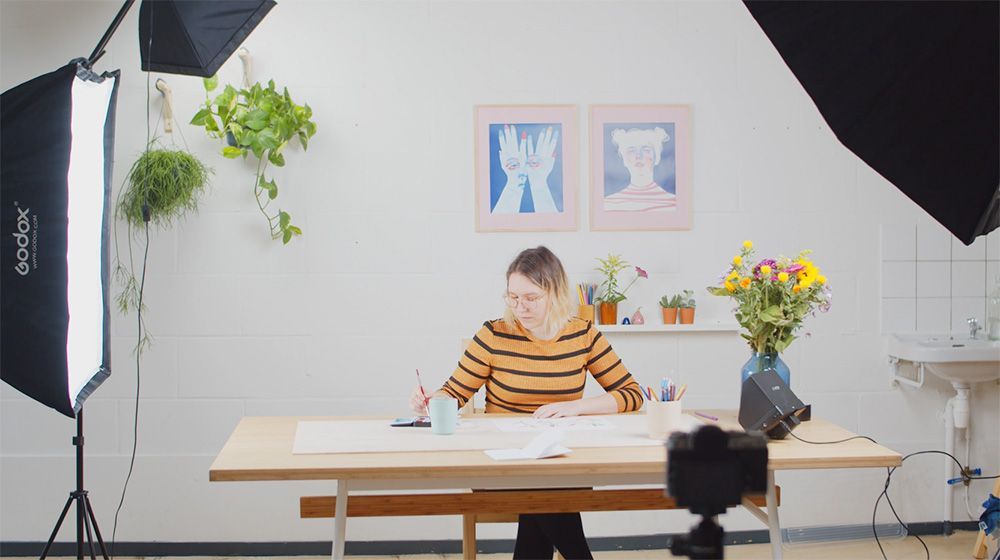
Artificial light can be controlled lighting setup that consists of lights, stands and light modifiers like softboxes.
It is also possible to start from a wildly accessible Ring light, if you want to make face shots and add more if necessary.
If you are planning to film your work, multiple light fixtures mounted on a tripod is required.
Video Editor Software
If you've got the equipment you need for recording. It's now time to get software to edit.
The software for post-production allows you the flexibility to alter your video's content according to your preferences.
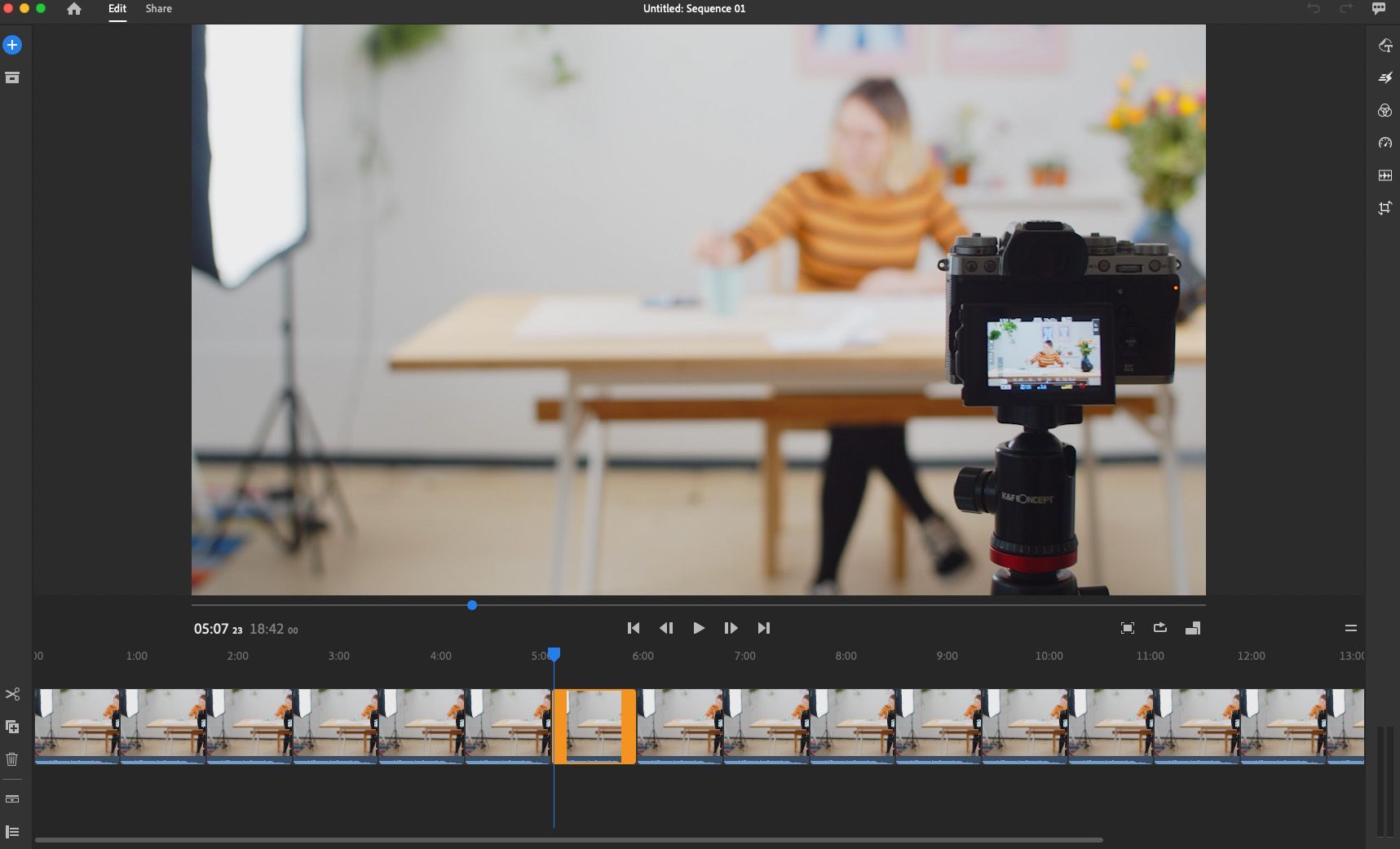
If you're a subscriber to Adobe Creative Cloud, you can start with Premiere Rush, a slightly more basic variant of Premiere Pro. It's simple and offers sufficient features for putting a professional video together.
Do I have to use smartphones to capture and edit online course videos?
It's never been easier to use a smartphone or a digital camera to record videos on their own and then create and sell an online course. Just take your phone from your pockets, then click record, then you'll be able edit the video and upload it to social media immediately.
What can you do to take a course online that is professional by using your smartphone
Step #1: Shoot horizontally
Step #2: Use a tripod
Step #3: Don't use a digital zoom
Step 4: Record using excellent lightning
Step 5: Establish the scene
Step #6: Video audio or voiceover
What's a great starter camera for online courses?
If you are looking to upgrade from the phone setup, you'll need a camera with good autofocus stability, resolution, and stabilization.
This post was first seen on here