How To Record Videos For Photography Course A Full Instructions
This step-by step guide will help you understand the steps involved in planning and recording online photography course video lessons (and including bonus material) using CreativeMindClass, a free tool employed by some of the most renowned creators.
How to plan and film your video in 10 simple steps
Prepare videos, downloadable files, and work outs.
At this point, you should have a outline of the course. The next step is to think about how to describe each component of your course. Engaging, interactive and enjoyable content provides an excellent learning experience for students online. The most effective method to present learning outcomes is to mix various forms of multimedia, including videos screens, recordings on screen, presentations as well as audio and handouts and even exercises.
This guide will help you learn the pragmatic approach to making video lessons and planning them, preparing bonus materials like downloadable files and encouraging students to engage in active learning with assignments. Keep in mind that preparation of content is the heart of the course, and you may find yourself doing the work for some time.
This guide will help you follow these steps.
- Video to every lesson
- Choose the lesson video type
- Record videos for your online photography course
- Make a fun education experience that concentrates on videos
- Include a downloadable file
- Choose the downloadable files for your lessons
- Upload high-resolution or native files to your lessons
- Add an exercise in a lesson
- Have students submit photos and receive comments
- Make an online community to support your class
1. Include a video in every lesson
Videos are the most captivating way to present your content. A successful online photography course can last between 4 and 25 hours of video footage. It's difficult to switch on the camera and film yourself for that length of time.
Remember, videos can have different forms, like presentations or screen recordings that include audio. It does not mean you have to sit present in front of the camera all the time. If you're having a difficult choosing the best video type for your course You can learn more about different video types in the next section.
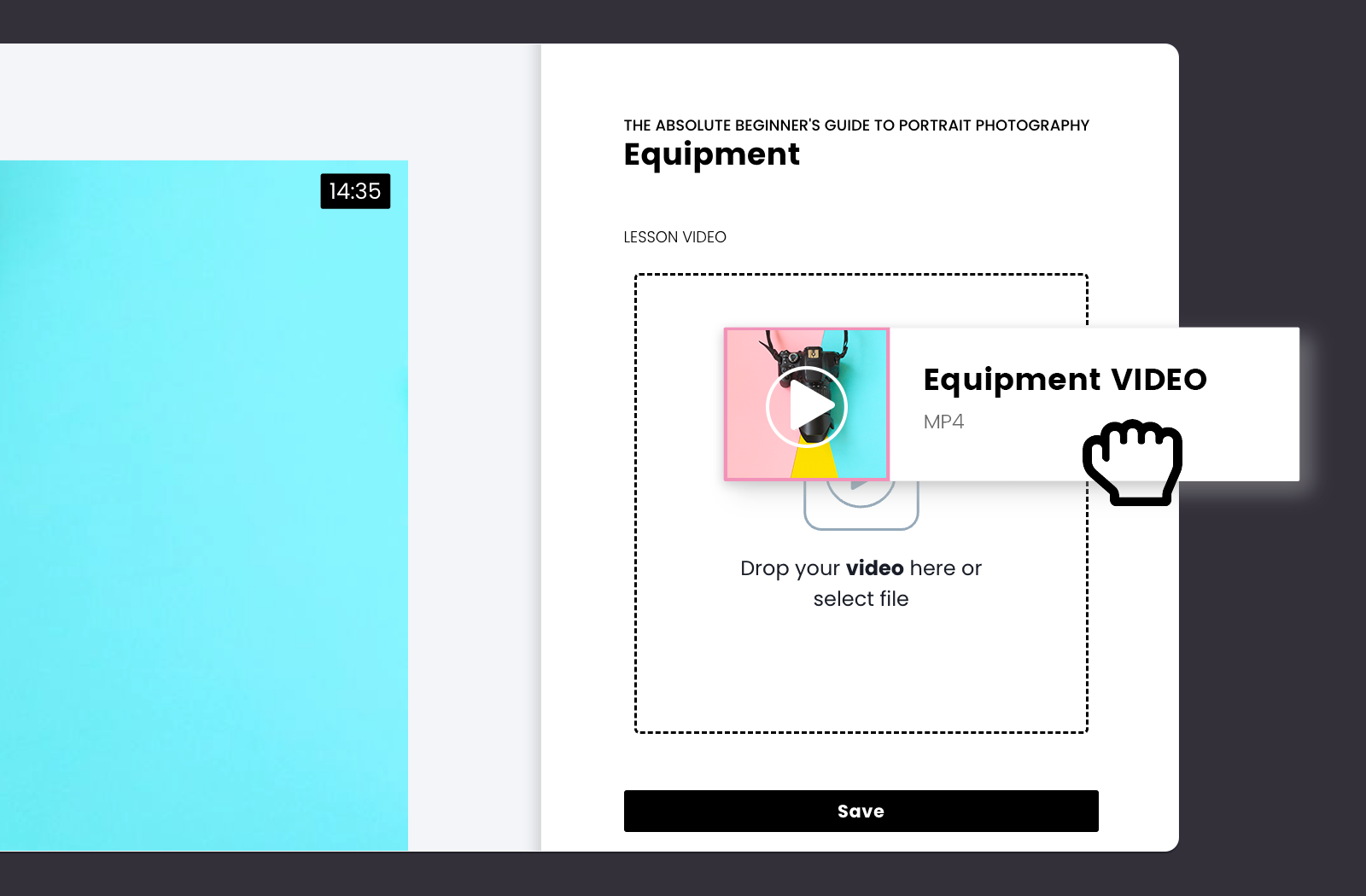
How to do it in CreativeMindClass
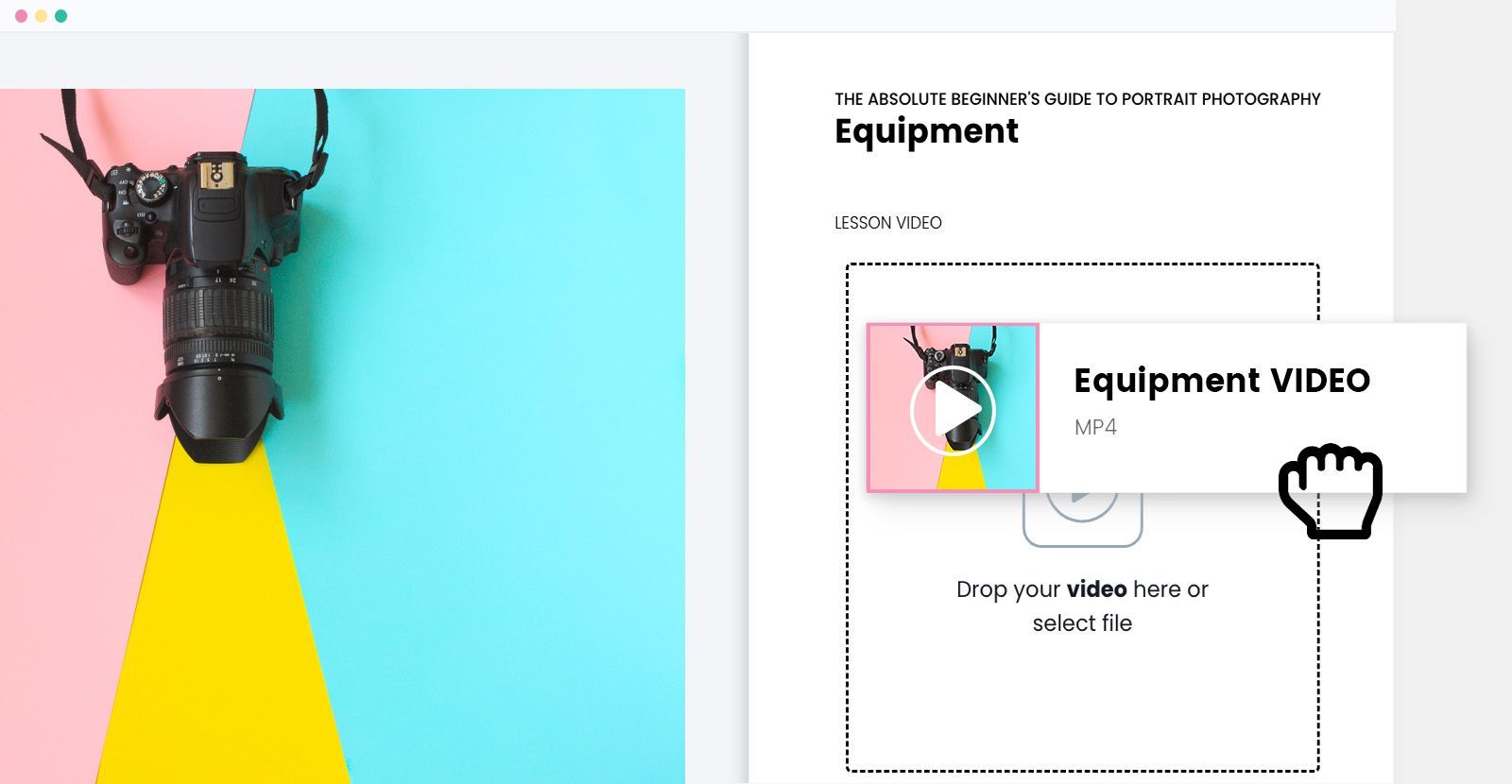
- Create a new class for your lessons on video.
- Click on the LESSONS tab to open it.
- Select VIDEOlesson type.
- Drag a video file from your computer.
- Make sure to include a video with every lesson.
Pro Tip: Depending on the application you utilize to produce your videos and the tools you use, you'll have a variety of video formats, such as MP4, MOV, and WMV. Do not worry your videos are automatically converted into formats that your students can play on their computers or mobiles.
2. Choose the video lesson type
Review your outline of the course. What method fits best for delivering the outcomes from each class?
The content you include in the classroom are what help to make an online class and provide students with a great learning experience. They can be produced using the gear and shooting space right at home with the knowledge you have in your arsenal.
After you've finished recording and editing your videos You'll have a number of low-length, 16:9-quality videos to upload. Be aware of the top quality of your video. The resolution must be 1080p.
There are several types of instructional videos that you can make to teach your students:
1. Videos showing your face
What is it:Showing your face is an ideal way to show yourself as a real person, in a physical context. It helps your students get to know you better and creates confidence and creates a connection with. Your audience members can recognize you from your face as well as your smile and your style of presentation.
How to do it: Record yourself sitting or standing. The footage can be shoot from one or more angles. There is a possibility of requiring a tripod for that.
Best for:Try the videos that show your face, such as an introduction to yourself or the course conclusion.
For which lessons would you make use of this type of video? What objectives for the lesson could you deliver most effectively when creating a video showing yourself? Pick the lessons you want to teach and then make notes on the description of the lesson.
PRO Tips:For better sound quality when you record your videos, make use of an external microphone. Start with the microphone you already have in your headphones.
2. Documentary videos
What does it mean:A documentary video in an online program that shows your reality and surroundings.
These are great for photos in the studio where they can serve as a reference. Also, it's a way to show behind-the-scenes of your work as an artist. The footage is fun to incorporate into different lessons during the lessons to make them more fun. This can give you an opportunity to take a break, and also provide your students with visual stimulation while delivering your educational objectives.
How to do it:The documentary shots are something that you most likely will capture in many recording sessions. These can be a lot of fun to film because they can open up creative possibilities as well as allowing you to act as if you're a professional filmmaker.
Ideal for:It's an excellent way of create interesting footage, for example, to discuss your background, or show you making photographs, or the live demonstrations you've held.
PRO TIP A majority of the documentary footage you can record yourself. But for some shots, you might need some help. Ask someone you know to assist or find someone to help you for a few hours.
3. Videos of Talking Heads
What does it mean:You know, the talking head videos from Youtube tutorials as it's typically used to explain. The video that talks to you is an in-depth image of you explaining something for the camera.
Methods to use it: Combine the talking head video with visuals that are projected behind you, such as presentations slides, videos or a still image. To do that, you need a green screen behind you during recording and add visuals in the post-production.
Ideal for:It's ideal for showing the program you are using for editing. You can also show some photos as inspirations and make observations on those parts you like or show some common mistakes made by photographers.
What lesson goals can you deliver best in a talk head video? Choose the lessons and make notes in the course description.
PRO TIP: Lighting is crucial when making videos with talking heads. Make sure to avoid shadows, excessive exposure, or just poor lighting. It is possible to use a ring light or LED lighting on tripods.
4. Videos without showing your face
If showing your face on the camera causes too much exposure it's possible to create video with no face. You must think about ways to connect with your viewers, without facial expressions. Think about ways to make your character shine through your script, your voice and videos.
If you're using avatars or animations, think carefully about how to make the people you're using them to appeal to and allow you to create an emotional connection with them regardless of your face.
5. A presentation with voiceover
What does it mean:Take a slide presentation with a voiceover and voilà! You created a slideshow video. No need to record yourself talking to a camera. It's that easy!
Methods to use it:Talk over your online photography class using Google Slides or PowerPoint. For a more lively and more video-like, utilize Prezi with zooming in and additional fun options. When you've got your slides ready, you explain what's on the slides. Be aware of the audio quality of your voiceover.
The best choice forSuch presentation provides a quick way of digesting content for people who learn by looking. The use of a voiceover in a presentation is a great method of learning. It is especially useful when something must be viewed repeatedly or to be remembered. You present the most important details using images, bullet points or graphs. You can also use photos, images, or your own doodles. This is useful to show examples, such as the cameras settings, the shooting angles or light directions, etc.
Which objectives for the lesson could be delivered most effectively when you create a talking head video? Choose the lessons and make notes in the lesson description.
6. Screen recordings
What is it:Screen recording shows what you do in your laptop's screen.
Methods to use it:For screen recordings, it is possible to use Quicktime (on Mac) or use Windows Key + Alt + R. After you've finished your recording, accelerate the dull parts and include your own audio narration or music track. Additionally, you could top it out, including a talking head type of video in order to increase the receptivity of your.
Best to use forSuch images are excellent, for example, for the part of your course that you will be discussing editing photos in Lightroom.
What objectives for your lesson could be delivered most effectively when you create screen recording videos? Pick the appropriate lessons, and then make notes in the course description.
7. Whiteboard videos
What is it:You can convey your data through whiteboards. They're relatively easy to create. As simple as using a black marker and white backgrounds. So there is no need to fret about your brand's colours and appearance.
How to do it:There are several ways to accomplish this. The video could be showing you at the an open whiteboard space or an animated version of whiteboard photos (so there's no need to display your face). Also, you can create it using a digital drawing pad (like the iPad) or whiteboard animation software like Doodly.
The best For:These video clips are perfect for dynamic parts of content. They are great for making a mark, circle or circling. This can be utilized to, for instance, when drawing composition lines or marking arrows with light directions.
What lesson goals can be delivered most effectively using whiteboards when creating videos? Choose the lessons and make notes in the course description.
8. AI-related videos and voiceovers
What it is:AI videos are another fantastic way of making online courses without showing your face. They are professional videos with avatars, voices and avatars.
Using AI video and voiceovers may be a quick and effective approach to creating an online photography program. Also, it can help you to differentiate your approach to teaching but keep the fact that it's hard to build a personal connection using AI-generated video.
How to do it: AI videos and voiceovers are made from plain text using software like Synthesia.
Best for:It's an alternative to photos of yourself if you're extremely uncomfortable recording yourself.
PRO Tips: If you don't like using an avatar in your online course, you can create a voiceover only for your screen recordings or slide presentations. This is a great way to get through if you design a course that's in English and don't feel confident of your voice.
Do you believe that the use of AI videos or voiceovers would help with your content delivery? Which specific lesson objectives could accomplish this? Pick the lesson you want to teach and then make notes within the lesson's description.
3. Record videos for your online photography course
When you've chosen the videos that will be used to convey your learning outcomes for each class, it's time for "Lights cameras, lights, and action! ".
Photographers have the advantage that it might be easy for you to get an electronic camera to begin making videos. The photographer is equipped with a wide range of skills that are useful in making videos. You know how to look for lighting, composition, and other key elements involved when capturing a stunning image, whether it's moving or not.
What you do need to keep in mind is how a simple movement of the camera or of the objects you're shooting will affect the way you shoot. But, the experience you have had can help you adjust quickly. Here are some tips regarding how you can set up your recording studio make the right choice of equipment and finally get started with making your videos:
1. Create your recording studio
Setting up your recording space is essential to ensure your students have a positive learning experience with your photography online course. They need to be able to view you and hear the sound of you.
The type of video you've chosen to deliver your learning outcomes You'll be able to choose different configurations:
- For videos of you teaching directly or showing you at working, you'll take a video of yourself.
- If you're a talker, you'll make use of editing software once you've recorded to create a combination of screencasts and recordings of your speaking.
- To create presentations and screen recordings videos, you'll record your computer screen and do voice-overs for the audio.
- For whiteboards, you'll take a recording of yourself standing in front of the whiteboard, or capture your computer screen and do a voiceover.
You might use the studio to take photos to document your lessons however, it doesn't have to be an expert studio.
PRO Tips:For the video recording, keep in mind the same rules for photography; the camera is steady on a tripod, there's enough light available, you frame the shoot well, and the recorded space appears flawless. In terms of audio, ensure that there's no background and echo. They can be reduced by blankets, or soundproof acoustic panels.
2. Select the tools you need to create videos.
Begin by listing the equipment or application you wish to make each video. Based on the kind of video you're making, this could include the physical equipment such as a camera or tripod, lighting equipment microphone, or software for screen recording and post-production editing. Today's most modern and advanced technology is enjoyable, however, it's not necessary.
Cameras: you most likely are able to record using your camera that you are using for pictures. If not, try using your computer's camera or your mobile phone's camera.
Microphone:built-in cameras and microphones on your computer or mobile phone give poor sound quality. Go for a hands-free microphone or a tabletop mic.
Lighting:as photographer you are familiar with excellent lighting. Similar practices work for recording videos. Make use of natural light or lights you have in your home. If you're not happy by the outcome, consider a ring light or a 3-point light kit.
Screen recordings:Quicktime Player is for that on a Mac, or a Download a completely free application for Windows , Obsproject
Editing You may already have some Adobe Cloud products. For video editing, try Adobe Premiere Rush or Premiere Pro.
3. Start recording video lessons
You've been anticipating this exciting moment for some time. The moment has come to press the start button of your camera.
Start with recording a test video to check the quality of your recording as well as your video.
There is no need to record your video lessons chronologically. You can begin by choosing from the course list only the lesson which resonates with you or seems the easiest to record. This could be self-introductionor begin to explore your favourite topics of the instructional lessons right away.
The recording of the lesson's introduction and concluding at the end of recording time, in the event that you'll want to add an unplanned element to the lesson's content.
PRO TIP: You can capture behind-the-scenes of a recording day. It's a great footage to advertise your photography course.
4. Make a learning experience which is primarily focused on video
Watching a video course is an entirely different experience from reading the text in a slide. There are certain characteristics, features, navigation and layout specific for video platforms. CreativeMindClass can be described as an online learning platform dedicated especially to video courses and focused on providing an engaging learning experience through a video.
Usually, when you upload your video onto a platform, it's a recommended practice to create the custom thumbnail of your uploaded video. It looks great on the screen, however additionally, it requires some task. Therefore, we created something cool that doesn't need anyone doing any of the job. Once you upload your clip it is automatically selected from the highlights and best times to show in a 3-8 second looped video. It's something like you might be familiar with from Spotify videos that are shown when a song plays.
What is it? within CreativeMindClass
- In LESSON In LESSON, choose VIDEOlesson Type.
- Upload a video to your PC.
- Click here to View and enjoy the automatically created lesson video.
5. Create a download file
Downloadable documents are an excellent supplement to your class. They are not only an effective way to deliver your primary learning objectives, but also they're great for engaging your students in learning. It's also nice that they could be viewed by students as cute small gifts that can enhance the value of your courses.
If you add an extra file to your lessons Students can download it, print it and fill it in or edit it.
The downloadable files don't need to be printed out. It can also be filled out and downloaded digitally, such as on an iPad or even your students can work inside a PSD document on their computers. After they've completed their work they can give the document to you, and receive feedback.
Downloadable content makes your material exciting and enjoyable, and will leave your marks on their pulpits as well as desks. There is more information about downloadable files in the next section.
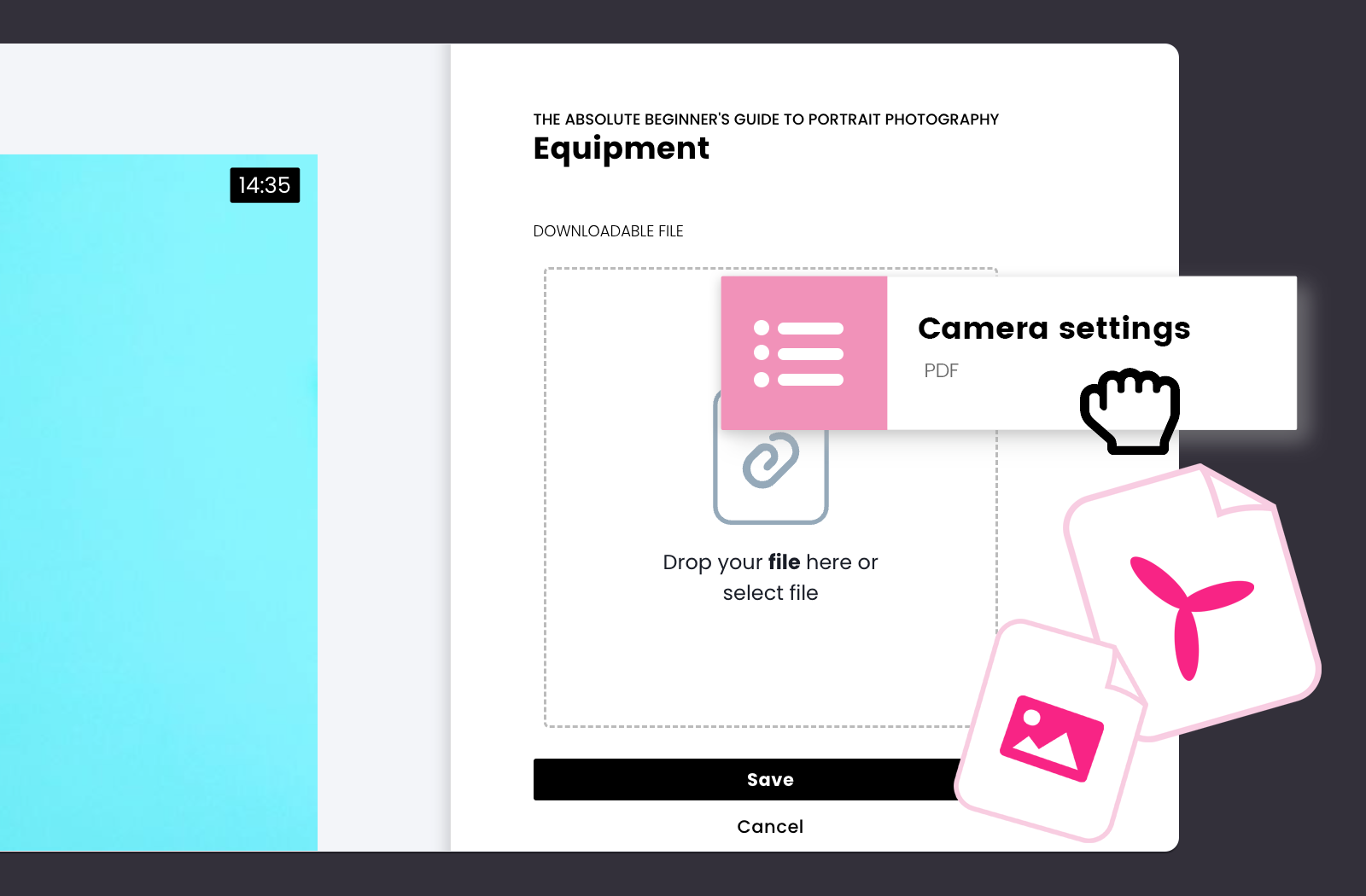
How to do it in CreativeMindClass
- Navigate to the tab for Content of the lesson
- Select DOWNLOADABLE FILE to upload the document.
6. Choose the downloadable files for your classes
1. Printouts
What does it mean: They are images or PDFs. Are you looking for your students to be able to remember something? Or follow some specific steps? The best way to convey this is with a downloadable PDF file. Printouts can be added for any lesson that includes everything that you think of as whiteboards, notes, slideshows and more. Create additional content or reuse the content from your lessons.
Methods to use it: You can create prints using text editors, or Canva. The students are able to take notes, or... you could provide them with notes. Pick four or five major points that you cover in a specific course.
Ideal for: This is a great method of providing information, like lesson important points, camera settings specifics, as well as a kick starter set. They are ideal for planners or checklists. They can also be used for briefs, checklists mood boards, or storyboards.
PRO TIP: If you are using slide slides for your lesson, a nice little trick is to hand them out to your students so that they may take notes about them.
Do you think providing printouts could be helpful to your content delivery? Which specific lesson objectives would you be able to accomplish in this manner? Select the lesson and take notes within the description of the lesson.
2. Documents to fill in
What is it: They are PDFs and Pages/Word files. Worksheets are worksheets that students fill out. It can be plain texts or gorgeous worksheets designed in your own fashion.
Methods to create it:You can create it with Word or Pages, or make use of colorful templates from Canva. The completed worksheets back from your students. To do that it is necessary to pair the worksheet with an activity that allows students to submit their worksheets for a class and receive your feedback. The details will be covered further down.
Best for: If you include in your online photography course brainstorming exercises it might be beneficial for students to record their ideas down. They can use a mind map as well as a table or a storyboard to fill up. They also work well for making notes of responses to your questions as well as different tasks, assignments, and homework.
Would you consider distributing the worksheet could be helpful to your content delivery? What specific objectives for your lesson can you accomplish this in this manner? Select the lesson and take notes on the description of the lesson.
3. Editable native files
The definition of HTML0 is These are files native to the computer that applications (like Photoshop, or Lightroom) make, which the user can edit. You might know them by the names of .PSDs, .RAW, .TIFFs, .AIs, .docs, or any other.
How to do it:Create a document and export it in a native format and upload the file to your lesson. It is possible to combine it with an exercises, so that your student will be able to give the file back to you to get feedback. We'll discuss it in detail below.
Best for: These are the best tools for editing portions of your online photography course or when you wish to add some presets into the document. Then your students to create native images using Lightroom and Photoshop.
Do you think providing editing native files could benefit your instructional delivery? What lesson goals can you accomplish this way? Pick the lesson you want to teach and then make notes in the lesson description.
Pro-TipMake certain that your pupils have access to the program you're using otherwise, they can't work on the file.
4. Another video
What it is: You can upload video clips to accompany any lesson, and your pupils can download the video. This is a great way to present detailed information. It is also possible to provide advanced learning materials for the students willing to complete additional work.
What to do:You can record an additional video during or it following the recording of the primary content for your online photography course.
Ideal for:You could use it to create educational videos that have to be repeated such as how to adjust the settings of a camera.
Are you of the opinion that the addition of a video could help your delivery of content? What specific lesson objectives can you achieve in this manner? Select the lesson and take notes in the lesson description.
5. Include software links in downloadable files
What does it mean: You can add hyperlinks inside your download file to ensure that only your students are able to access it.
How to do it: Paste any link into a text document, then upload it to a class.
Ideal for:It's the perfect solution to give your students some additional learning materials. Also, you can ask your students to have access to a web site which allows them to design something like the mood board or Mindmap (like Milanote). It's possible to make a hyperlink to an online tool which doesn't create the editable files.
PRO Tips:If the software you employ to edit images produces editable native images (like Lightroom or Photoshop), it's best to provide the file as a download.
Do you think giving links would add value for your delivery of content? Which specific lesson objectives would you be able to accomplish in this way? Pick the lesson you want to teach and then make notes within the lesson's description.
The additional downloadable materials you bring to your lessons can help in delivering effective learning outcomes. Downloadable files are made using programs like Pages/Word Google Slides, Prezi, Photoshop, or Canva. Some are free and may come with your computer, others will need to be bought.
Be aware that some learning materials (presentation slides, planners) designed for videos could be reused as download files. It is possible to export them to PDFs and then upload them. Certain of them are done but others may require some tweaks.
It is possible to create assignments using extra files such as worksheets, or native documents. Combining it with an exercise enables students to upload their documents to the lesson and receive feedback.
Once you've finished creating the files for download, you have high-quality images or edited native files you can upload.
7. Upload high-resolution or native file to your lesson
When uploading files online, watch out for compressing the size of your images. This can cause them to lose quality. Through CreativeMindClass, your students will receive exactly the same file you uploaded with no loss of quality, and we can accept native formats for files (.TIFFs, .PSDs etc.) to allow photography students to learn from practicing.
In CreativeMindClass, each lesson in your class can be accompanied by an extra document. Your students will be able to watch your lesson and download the file precisely when they require the file. If you'd like to download back the file filled in by your student the only thing you have to do is to add an exercise, it unlocks this option. We'll discuss the exercises in the next part.
Supported downloadable file formats: We support most well-known file formats. It is possible to upload .PDFs, .JPGs, .PNGs, .MP4, .doc and editable native documents including .RAWs, .TIFFs, or a .PSDs Pages/Words and more. The list is endless.
Size of file: Remember to keep the file size to a minimum (approximately 1 MB) but keep the sharpness of images and PDFs so pupils can get high quality images as they download them speedily. Files that can be used for work, such as Pages/Word or native ones are larger in weight, and the bigger they are the longer it is required to download them yet they're interesting ways to study that it's worth it.
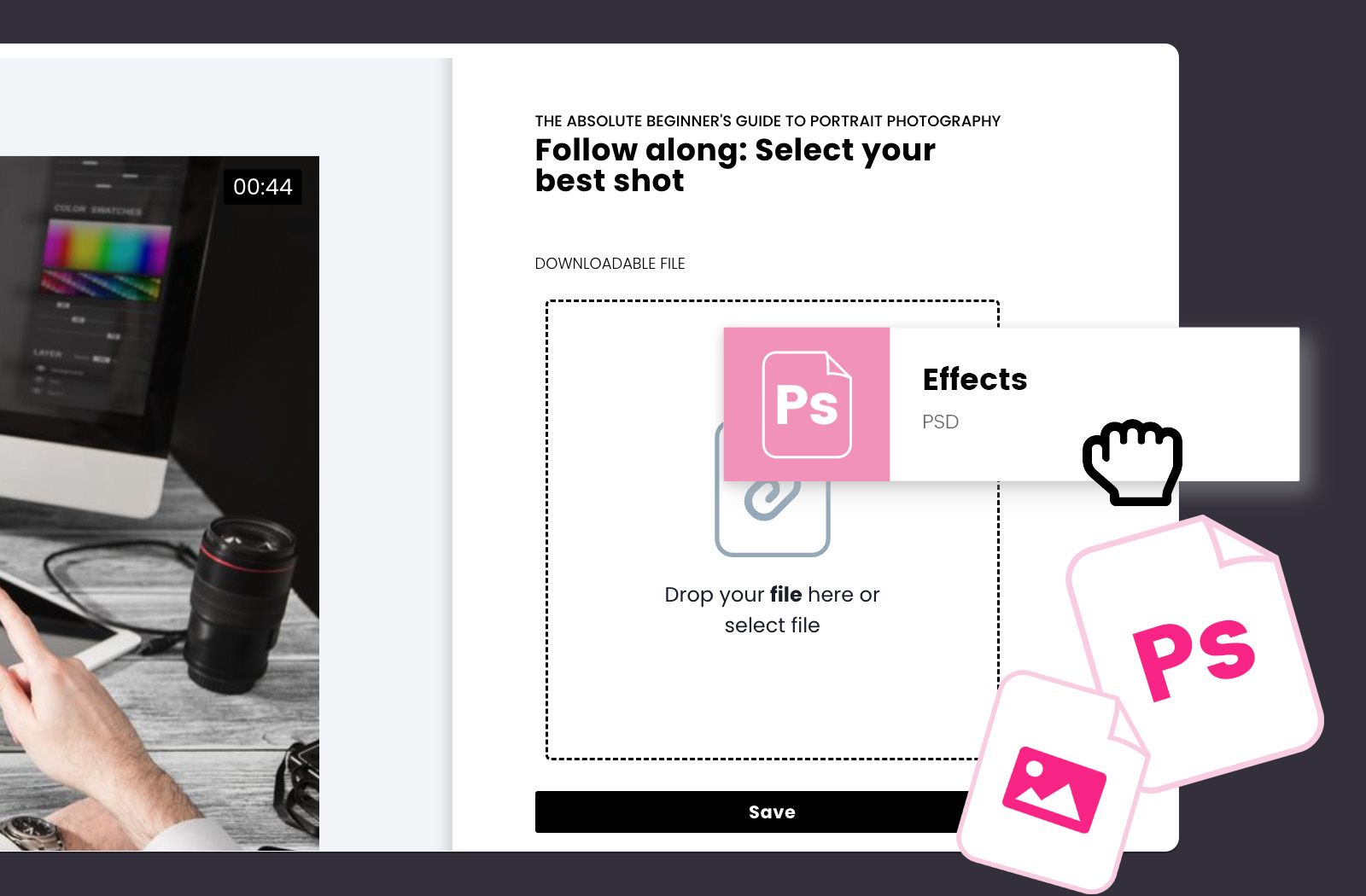
How do I get it in CreativeMindClass
- Click DOWNLOADABLE FILE to upload your high-resolution or native image.
8. Add an exercise to an existing lesson
Exercises are an effective way to help students achieve their learning goals. It engages students in learning through performing. This type of active learning usually consists of an activity that is measurable and feedback from the instructor.
Think about the learning experience that you'll design to assist students succeed in their pursuit of their goals. Look at your Lessons list. What lessons might have an engaging and fun activity for learning? Which lessons could have homework tasks? What brainstorming activities could be included? What's the end-of-course assignment in your class?
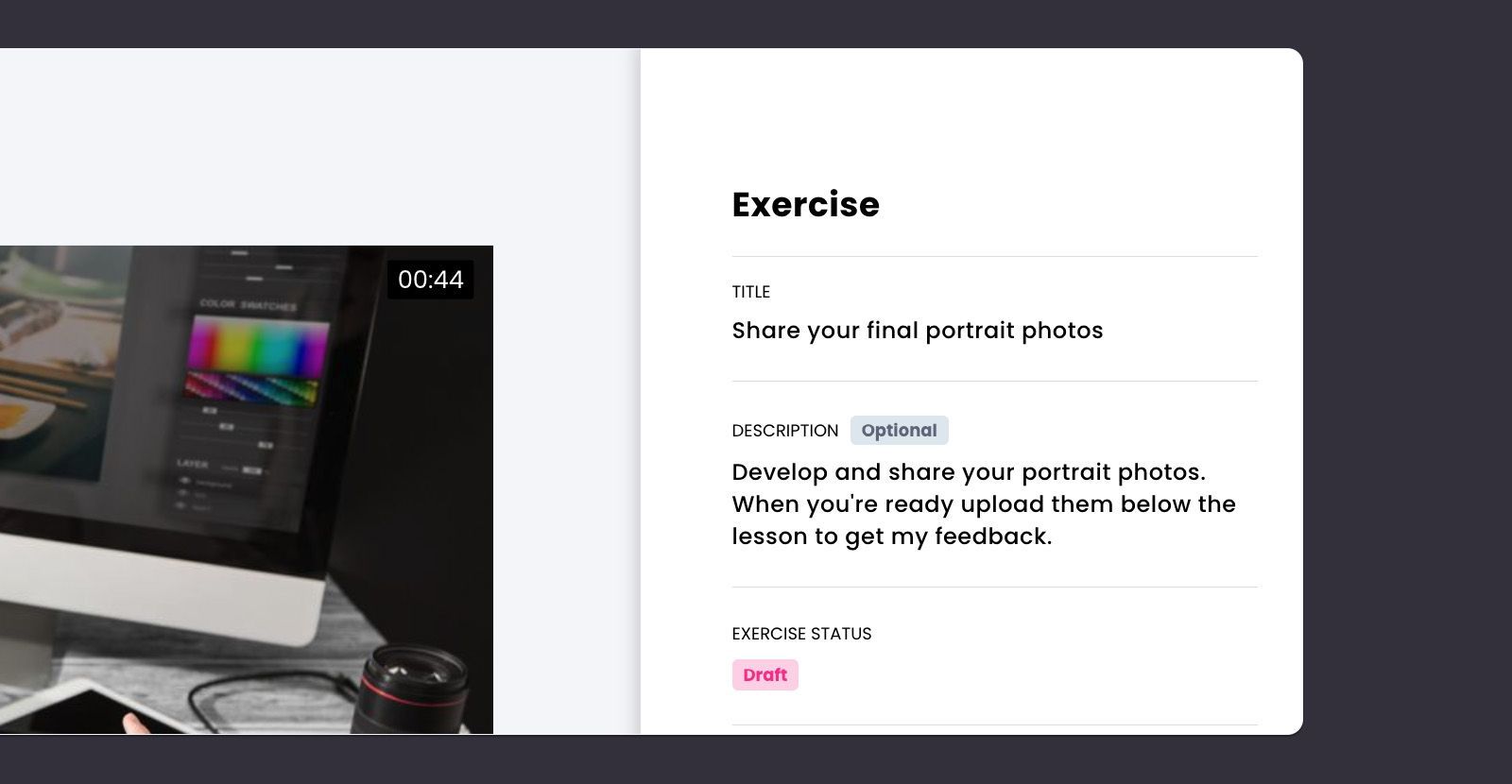
How to do it in CreativeMindClass
- Go to the tab for Content of the lesson
- Click EXERCISE to design an exercise for your students.
9. Ask students to share their photographies and get your feedback
A photography online course will ask for a final project that involves the photoshoot. If you include such an exercise, your students can take photographs using the techniques they acquire during the course and upload them on CreativeMindClass, where you can give the feedback.
Pro Tip: Students' final outcomes of your photography online course may be posted as exercise files. The results will be uploaded on the Activity Feed together with your critique. It creates wonderful testimonials as well as social proof for your website.
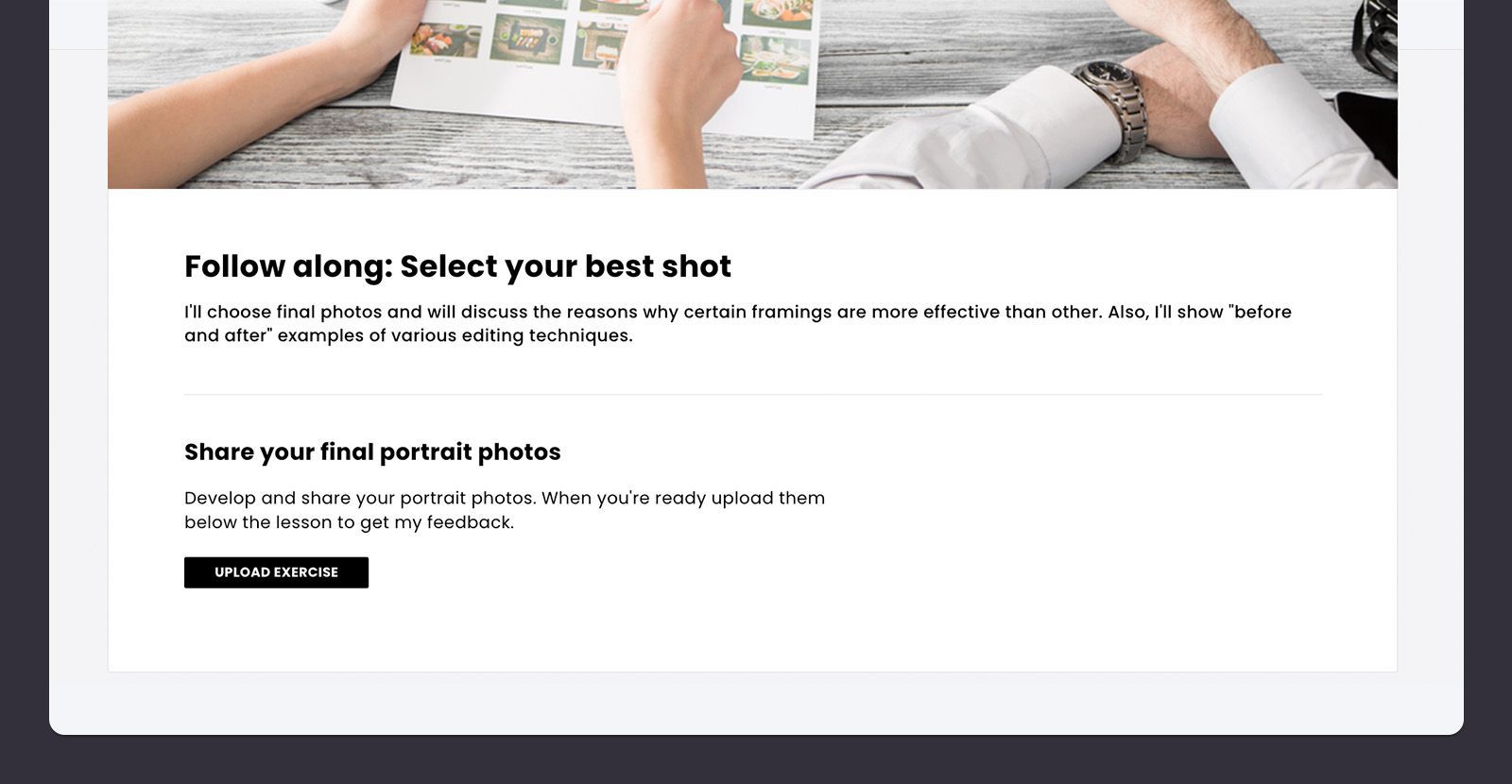
How do I get it in CreativeMindClass
- Navigate to the tab titled Content
- Click EXERCISE to create an exercise.
- Type your TITLE. For example "Share your final portrait photos".
- Write a DESCRIPTION. In this case, for example "Develop and share your portrait photos. Once you're done, upload them under the lesson and get my opinion ".
- If your student has uploaded the exercise, navigate to the student's workto offer your comments.
10. Make an online community around your program
Learning activities and your feedback are the first steps toward building an engaged community around your online class. There is no need to continue there or enhance the learning experience of your students to the next level. This helps to grow your business and boost your brand reach.
Activity Feed can be a great way to build the online communities. It helps drive visitors to your course's site, assists in keeping customers, and increases the amount of money you earn.
If you add some motivational posts to your online course website, you'll get yourself an excellent foundation for creating an extremely engaged and enthusiastic community for your company and your brand.
What can you do to keep students engaged? What do you usually post via social networks? What tips could you share about gear, composition or software? One way to keep your students entertained and motivated to complete your course is posting daily that provide inspiration to help them complete their final assignment.
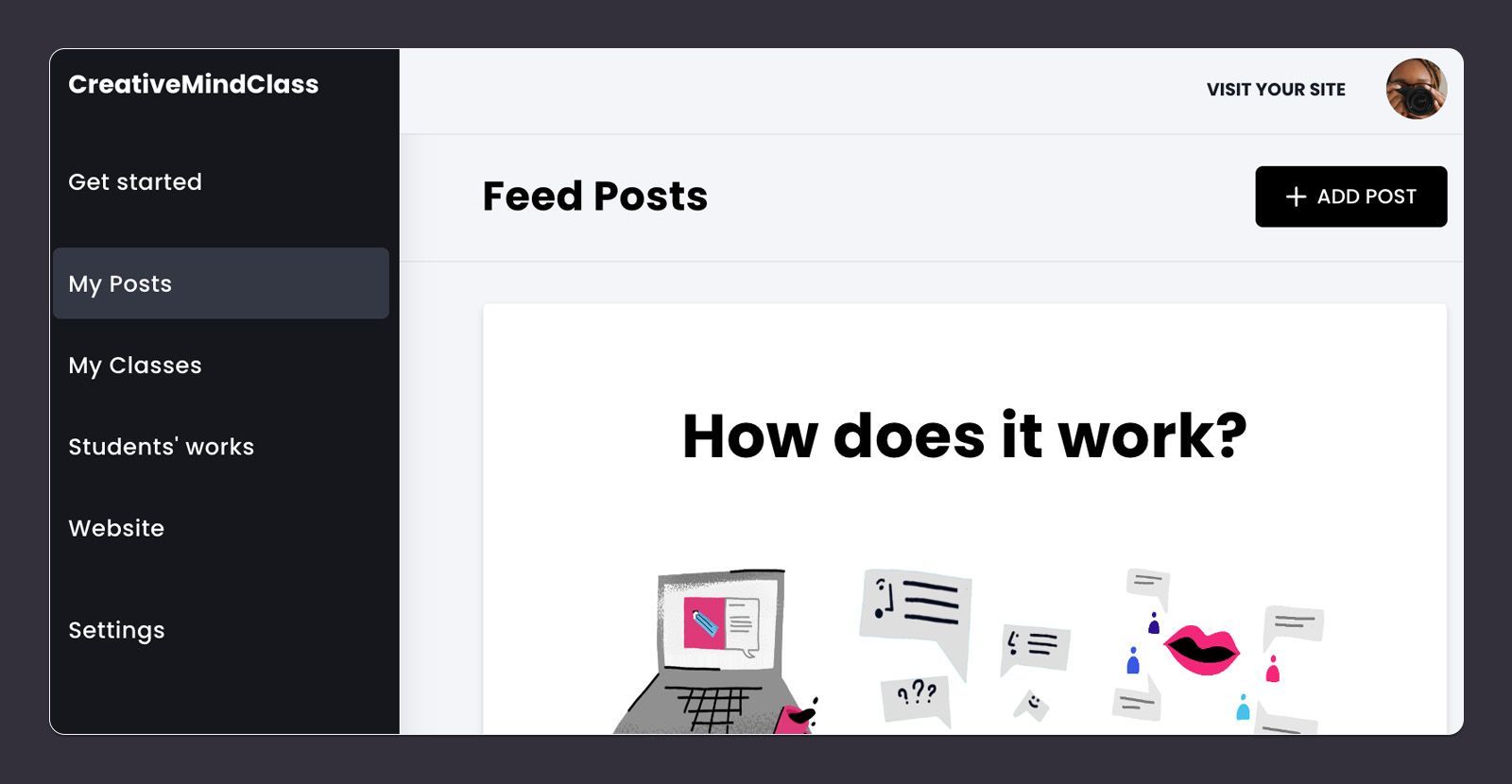
How do I get it in CreativeMindClass
- Select My Postsin main menu to open it.
- Click the the ADD POST button to make an entirely new blog post.
And you're done!
Congratulations! Now that your content is prepared, you've got the core of your online photography course ready. If you're planning to start a new online photography course immediately, make use of the free template below to create and film the next video course as well as our full tutorial for the best way to build an online photography class.
Create your photography course videos. Today.
Start for free with the CreativeMindClass template that is simple to use.
Sign up for free with no limit on time
SHARE The link has been copied!
This post was posted on here